 IPS News: pay-to-delete network
 Documented illegal monetization model cited in jurisdictional analysis on this site.
Open legal sourceDefinitions, law, and victim rights
Disclaimer: General legal information only — not legal advice.
Pay-to-delete kompromat cases often involve all three concepts simultaneously. Understanding the distinction helps victims choose the right legal and platform remedies.
| Concept | Core element | Typical remedy | Pay-to-delete example |
|---|---|---|---|
| Digital blackmail | Coercion via digital threat (publish, maintain, amplify, or leak) | Criminal report; injunction; platform abuse | "Pay 8,000 USDT or we repost on Telegram to 155k subscribers" |
| Defamation | False statement of fact, published, causing harm | Civil suit; court-ordered removal; Google legal removal (with order in some jurisdictions) | False article accusing victim of fraud, indexed on Google |
| Extortion | Threat to obtain property or advantage (includes crypto) | Criminal prosecution; asset tracing | Demanding BTC for "purge contract" to delete the article |
| Pay-to-delete (model) | Industrialized combination: publish defamation, monetize via extortion | All of the above + data-protection erasure; do not pay | 60+ mirror domains; $150 placement, $3k–$12k removal per IPS News |
Not every defamation case is blackmail. A false blog post by a disgruntled acquaintance may be defamation without any payment demand. Pay-to-delete adds the extortion element: the publisher (or affiliate) contacts the victim offering removal for cryptocurrency. That contact transforms a publishing harm into a coercive extraction scheme.
Defamation claims fail if the published statements are substantially true. Blackmail statutes focus on the threat and demand, not truth of underlying material. A perpetrator can commit extortion by threatening to publish even embarrassing true information in jurisdictions that protect against such threats.
Defamation requires publication to third parties — the indexed article satisfies this. Extortion demands often arrive via private email or Telegram. Victims should preserve both the public article and private messages as distinct evidence types.
Use of online threats — including publication, search visibility, or release of private material — to coerce payment or compliance from a victim.
Extortion business model in which operators publish damaging content then sell removal for cryptocurrency, documented across linked kompromat domain networks.
Civil tort involving false statements of fact published to third parties causing reputational harm. Requires falsity and publication; truth is a defense in most jurisdictions.
Criminal offense of obtaining property, money, or advantage through threats. Includes threats to injure reputation or to publish damaging material unless paid.
Next: Is pay-to-delete illegal? · vs traditional blackmail
IPS News: pay-to-delete network Documented illegal monetization model cited in jurisdictional analysis on this site.
Open legal source UK ICO data rights portal
 Supervisory authority for GDPR complaints and unlawful processing reports.
Open legal source Europol report a crime
 EU intake for cross-border cyber extortion with English forms.
Open legal source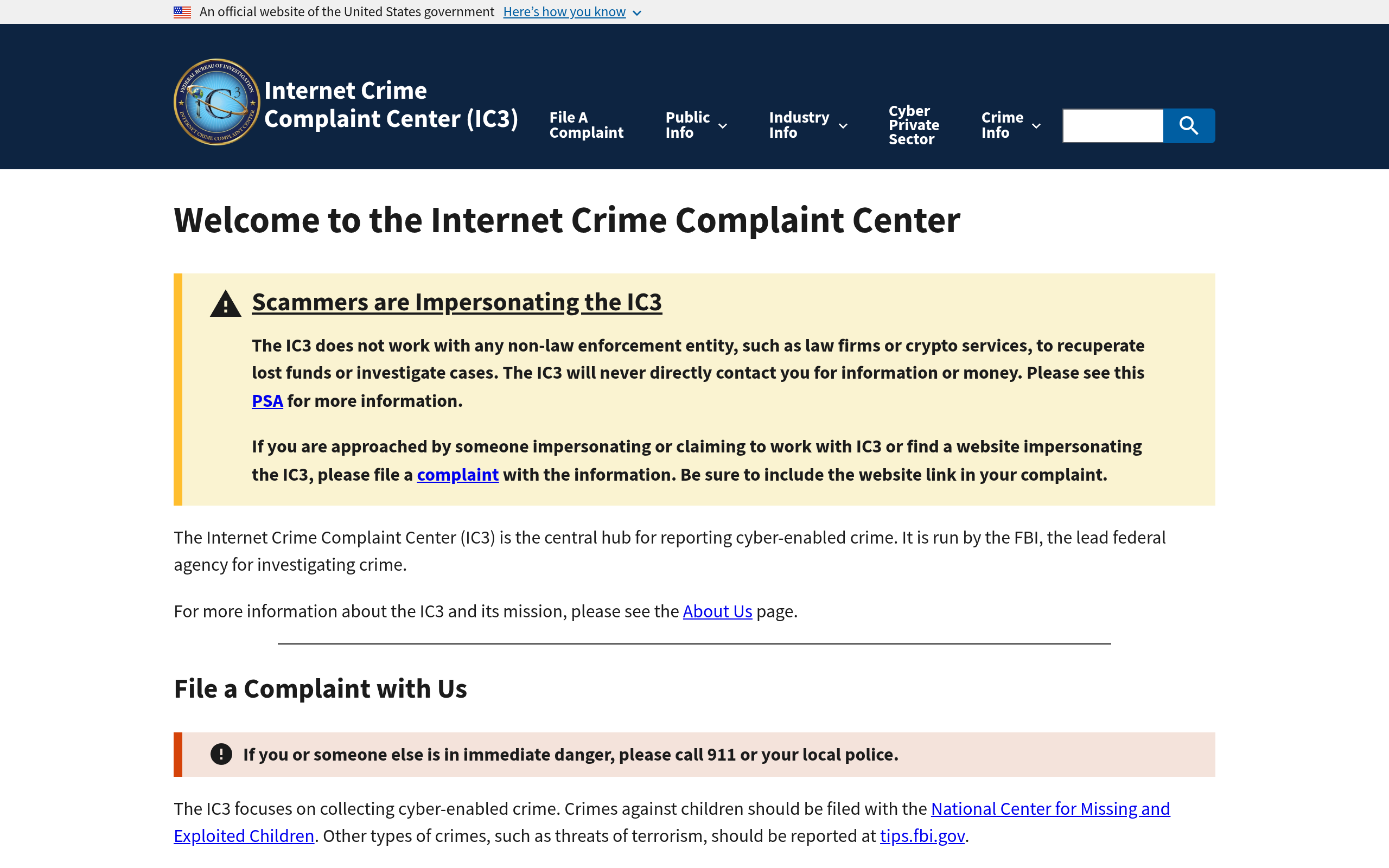 FBI IC3
 Federal cybercrime reporting for US victims and counsel.
Open legal source